


Chart patterns are everywhere—textbooks, YouTube videos, trading courses, and social media posts.
Yet most traders quietly ask the same question:
“If patterns really work… why do they fail so often?”
The truth is uncomfortable but empowering:
Chart patterns don’t fail randomly. They fail when traded in the wrong conditions.
In this article, we’ll break down exactly when chart patterns work best, why they fail most of the time, and how smart traders use context, behavior, and timing to turn patterns into high-probability setups.


The Big Myth About Chart Patterns
Most traders believe:
- A pattern = a signal
- A breakout = instant profit
- A textbook setup = high probability
But markets don’t reward shapes.
They reward behavior.
Patterns are visual summaries of market psychology—not prediction tools.


Struggling with repeated trading mistakes? Explore The 48-Hour Trading Reset →
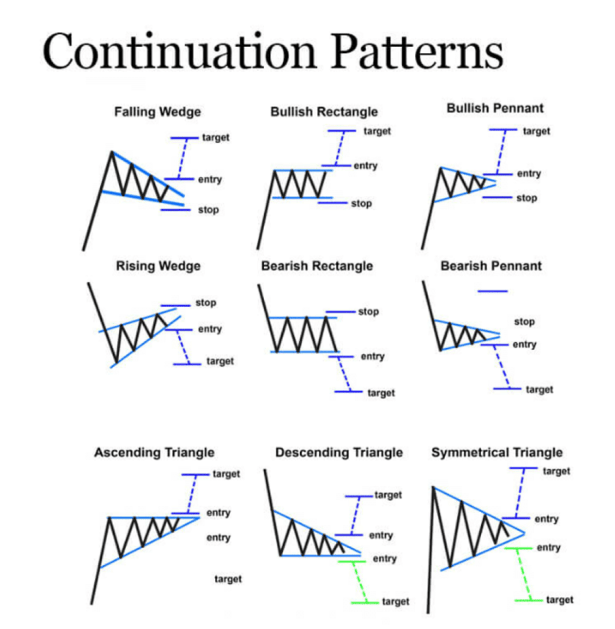
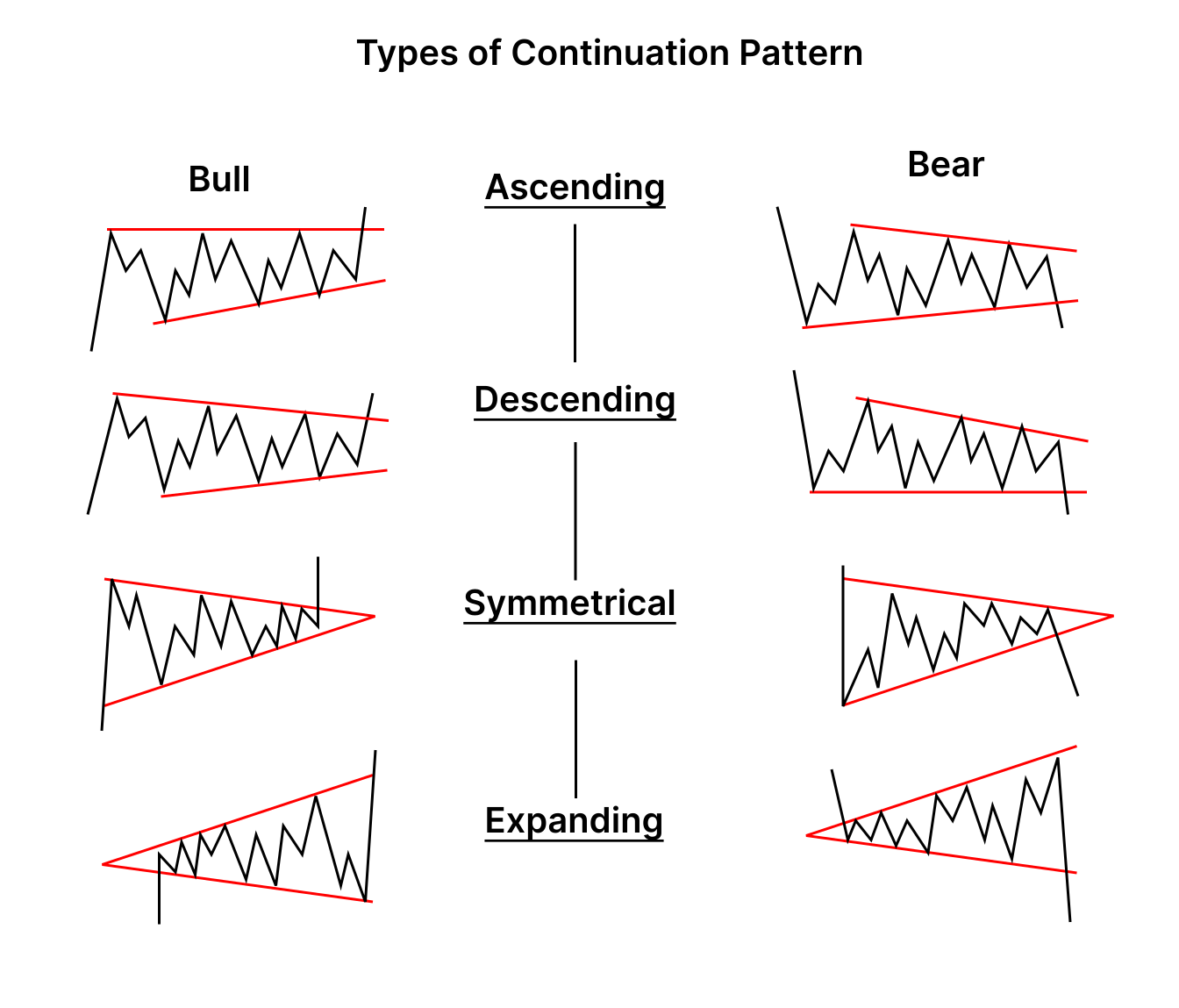
Chart Patterns Work Best When the Market Is Trending


Why trends matter more than patterns
Patterns perform best when they align with the dominant trend.
- Continuation patterns thrive in trends
- Reversal patterns struggle against strong momentum
- Counter-trend trades have lower follow-through
High-probability environments:
- Bull flags in strong uptrends
- Bear flags in clean downtrends
- Breakouts in established market structure
Low-probability environments:
- Reversal patterns in runaway trends
- Sideways markets pretending to trend
- Patterns fighting higher-timeframe bias
Rule:
If the trend is strong, continuation patterns work best.
Chart Patterns Work Best With Volume Confirmation


Volume answers one critical question:
“Who is participating?”
When patterns work:
- Volume contracts during pattern formation
- Volume expands on breakout
- Follow-through candles show commitment
When patterns fail:
- Breakouts on weak or declining volume
- Sudden volume spikes after long distribution
- Volume that fades immediately after entry
Volume is intent.
Price is result.
If intent is missing, patterns lose power.
Chart Patterns Work Best Away From Key Levels
Many traders ignore where a pattern forms.
That’s costly.
High-probability locations:
- Breakouts above clean resistance
- Continuation patterns above VWAP or key EMAs
- Setups with clear open space ahead
Low-probability locations:
- Directly below major resistance
- Inside higher-timeframe supply zones
- Near all-time highs without accumulation
A pattern trapped near a key level often becomes liquidity—
not opportunity.
Chart Patterns Work Best When Timeframes Align


Professional traders don’t trade patterns in isolation.
They stack probabilities.
Best-case scenario:
- Higher timeframe trend supports direction
- Entry timeframe shows clean pattern
- Lower timeframe confirms execution
Worst-case scenario:
- Lower timeframe breakout
- Higher timeframe resistance overhead
- No structural support
Alignment creates follow-through.
Misalignment creates traps.
Chart Patterns Work Best After Compression
Patterns work when the market has something to release.
Strong setups show:
- Decreasing volatility
- Narrowing ranges
- Clean accumulation or distribution
Weak setups show:
- Random price movement
- Large erratic candles
- Emotional trading before the pattern completes
Compression builds stored energy.
Without it, breakouts fizzle.
Chart Patterns Fail Most Often Because of One Reason
Traders confuse recognition with confirmation.
Spotting a pattern is easy.
Waiting for market acceptance is hard.
Most losses come from:
- Anticipating breakouts
- Entering before confirmation
- Ignoring failed attempts
A failed pattern often leads to a bigger move in the opposite direction—because trapped traders create fuel.
How Smart Traders Use Chart Patterns Differently
They don’t ask:
“Is this a pattern?”
They ask:
- What is the market doing?
- Who is trapped?
- Is participation increasing?
- Is structure supporting continuation?
Patterns are the last step, not the first.
A Simple Checklist: When Chart Patterns Work Best
Before trading any pattern, ask:
✔ Is the higher timeframe aligned?
✔ Is volume supporting the move?
✔ Is there space beyond the breakout?
✔ Is the market compressing, not expanding?
✔ Is this continuation—not hope?
If 3 or more answers are “no”, skip the trade.
Still struggling with inconsistent trading decisions?
The 48-Hour Trading Reset is a practical 213-page framework for controlling avoidable losses, rebuilding discipline, and creating a simple, repeatable trading process.
Educational use only. Trading involves risk and losses can occur.
Final Truth Traders Learn Late
Patterns don’t create profits.
Context does.
When chart patterns work best, they do so because:
- Market structure supports them
- Volume confirms participation
- Psychology favors continuation
- Timing aligns with intent
Trade behavior—not drawings.