


Introduction: The Pattern That Looks Easy—Until It Isn’t
Wedge patterns are taught early in technical analysis.
They look clean. Predictable. Almost too simple.
Yet ironically, wedges confuse more traders than almost any other chart pattern.
Some traders swear by them.
Others lose money repeatedly trading them.
So what’s the truth?
👉 Wedges don’t fail randomly. Traders misunderstand them systematically.
In this article, you’ll learn:
- Why wedges appear reliable but often mislead
- The hidden psychology behind wedge traps
- The most common mistakes traders make
- How smart traders use wedges correctly
- When you should ignore wedges entirely
This is not another textbook explanation.
This is how wedges behave in real markets.
What Is a Wedge Pattern? (Quick Recap)
A wedge forms when:
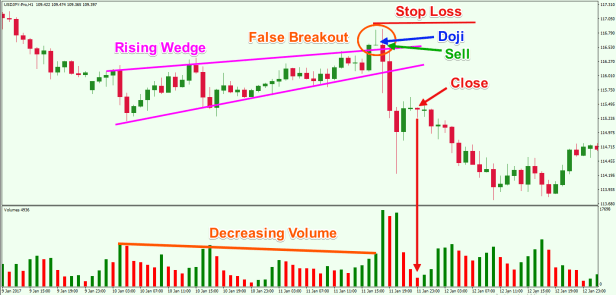
- Price compresses between two converging trendlines
- Volatility contracts
- Momentum slows
Types of Wedges:
- Rising Wedge → Usually bearish
- Falling Wedge → Usually bullish
Sounds simple.
But markets rarely reward simple thinking.


Reason #1: Traders Don’t Agree on Direction
Here’s the first major problem:
The Same Wedge Sends Opposite Signals
- A rising wedge in an uptrend:
- Some traders expect continuation
- Others expect reversal
- A falling wedge in a downtrend:
- Bulls see accumulation
- Bears see weakness
📌 The pattern itself doesn’t give clarity—context does.
Most traders trade wedges in isolation, which leads to confusion and losses.
Reason #2: Wedges Break Both Ways (More Often Than You Think)
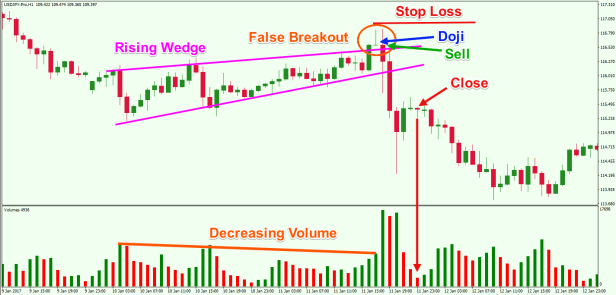
Textbooks say wedges break in a “preferred” direction.
Reality says:
- Wedges frequently fake break
- Stop-losses are clustered near trendlines
- Market makers know this
Result?
💥 False breakouts
💥 Whipsaws
💥 Emotional exits
If you’ve ever said:
“The breakout looked perfect… then reversed instantly”
You’ve experienced a wedge liquidity trap.


Reason #3: Most Wedges Form During Low-Conviction Markets
Wedges often appear when:
- Volume is declining
- Momentum indicators flatten
- Participation dries up
This means:
❌ No strong buyers
❌ No strong sellers
Just compression, not decision.
📉 Traders mistake lack of movement for preparation for a big move.
Sometimes, the market is simply… undecided.
Reason #4: Trend Matters More Than the Wedge
Here’s a hard truth:
Wedges against the dominant trend fail more often.
Examples:
- Falling wedge in a strong downtrend → often breaks down
- Rising wedge in a strong uptrend → often breaks up
Why?
Because trend strength overrides pattern structure.
Smart traders always ask:
- What is the higher timeframe doing?
- Is this wedge with or against momentum?
Most traders don’t.
Reason #5: Traders Enter Too Early
Another classic mistake:
📍 Entering before confirmation
Wedges encourage anticipation:
- “It’s about to break”
- “Risk-reward looks amazing”
- “I don’t want to miss it”
But wedges can compress far longer than expected.
Result:
- Capital stuck
- Emotional fatigue
- Forced exits before the real move
📌 Wedges reward patience, not prediction.
The Psychological Trap: Why Wedges Feel So Convincing
Wedges appeal to traders because:
- Lines converge → feels logical
- Compression → feels powerful
- Symmetry → feels “engineered”
But markets don’t move because of shapes.
They move because of:
- Liquidity
- Positioning
- Fear and greed
Wedges are visual illusions unless backed by context.
How Smart Traders Actually Use Wedges


Professionals don’t trade wedges alone.
They combine them with:
- 📊 Volume expansion
- 📈 Momentum divergence
- 🧭 Higher timeframe trend
- 🧱 Major support/resistance zones
Smart Rule:
Trade the reaction, not the anticipation
They wait for:
- Break + retest
- Expansion in volume
- Confirmation candle
That’s the difference.
When You Should Avoid Trading Wedges Entirely
Avoid wedges when:
❌ Market is range-bound
❌ News-driven volatility is near
❌ Volume keeps declining
❌ Trend is extremely strong against the wedge
Sometimes, no trade is the best trade.
Final Truth: Why Wedges Confuse Most Traders
Wedges confuse traders because:
- They look predictive but aren’t
- They invite early entries
- They hide liquidity traps
- They depend heavily on context
- They punish pattern-only thinking
The Real Lesson:
💡 A wedge is not a signal.
It’s a question.
The market answers it—not you.
Still struggling with inconsistent trading decisions?
The 48-Hour Trading Reset is a practical 213-page framework for controlling avoidable losses, rebuilding discipline, and creating a simple, repeatable trading process.
Educational use only. Trading involves risk and losses can occur.
Want to Trade Wedges Like a Pro?
If you want:
- Fewer fake breakouts
- Better timing
- More confidence in pattern trading
👉 Start treating wedges as confirmation tools, not prediction tools.
Because in trading:
Clarity beats complexity. Every time.